Understanding the ATP points system and how it impacts a player’s ranking is essential for any tennis enthusiast. Whether you’re a casual fan or someone diving deep into the sport, knowing how many ATP points a Grand Slam victory awards is key to grasping how the tennis ranking system works. In this article, we’ll break down the ATP points system, specifically focusing on Grand Slam tournaments, and explain how these points contribute to a player’s overall ranking.
What is ATP in Tennis?
The ATP, or Association of Tennis Professionals, is the governing body of the men’s professional tennis circuits. The ATP is responsible for organizing tournaments, maintaining the tennis rankings, and ensuring the sport runs smoothly at a professional level. When we talk about ATP points, we refer to the system used to rank players based on their performances in various tournaments throughout the year.
The Role of ATP in Global Tennis
The ATP plays a crucial role in standardizing tennis competitions worldwide. By establishing rules, organizing events, and offering a structured ranking system, the ATP ensures the sport remains competitive and fair. This organization not only manages the professional tour but also enhances the global appeal of tennis.
History and Evolution of the ATP
Founded in 1972, the ATP has evolved significantly over the decades. Initially created to protect players’ interests, the ATP has grown into a powerful body that governs the men’s professional circuit. Over time, the ranking system has undergone changes to more accurately reflect player performances and achievements.
ATP’s Impact on Tennis Careers
The ATP ranking system can make or break a player’s career. High rankings lead to better seeding in tournaments, which can provide advantageous draws and greater opportunities for success. Players often strategize their schedules around ATP points to optimize their rankings and secure spots in prestigious tournaments.
How Does the Tennis Ranking System Work?
The ATP ranking system is primarily based on a player’s performance in tournaments over a rolling 52-week period. Players accumulate points by participating and advancing in tournaments. The more prestigious the tournament, the more points are at stake. The ATP points system aims to objectively measure a player’s performance, allowing fans and officials to track their progress.
The 52-Week Rolling Period
The ATP ranking system operates on a rolling 52-week basis, meaning that points from tournaments drop off after a year. This system ensures that the rankings reflect a player’s current form rather than past glories. Players must consistently perform well to maintain or improve their rankings.
Types of Tournaments in the ATP System
The ATP calendar features a variety of tournaments, each offering different point values. From Grand Slams and ATP Masters 1000 events to ATP 500 and 250 tournaments, players have numerous opportunities to earn points. Each tournament tier demands a different level of skill and endurance, contributing to a player’s overall standing.
Importance of Tournament Prestige
Tournament prestige is a critical factor in the ATP points system. Grand Slams and ATP Masters 1000 events offer the most points, attracting the world’s top players. Performing well in these prestigious tournaments can catapult players up the rankings, while lesser events provide vital opportunities for emerging talents to gain points.
Points for a Grand Slam Victory
Grand Slam tournaments are the most prestigious events in tennis, comprising the Australian Open, French Open, Wimbledon, and the US Open. Winning a Grand Slam not only brings prestige and a significant prize purse but also a substantial number of ATP points. Here is the points breakdown for Grand Slam tournaments:
Winner: 2000 points
Finalist: 1200 points
Semi-finalist: 720 points
Quarter-finalist: 360 points
Round of 16: 180 points
Round of 32: 90 points
Round of 64: 45 points
Round of 128: 10 points
As you can see, a Grand Slam victory can dramatically impact a player’s ranking, often propelling them several spots higher in the ATP rankings.
Significance of Grand Slam Points
The points awarded at Grand Slams represent the pinnacle of the ATP ranking system. A single victory can significantly alter a player’s career trajectory, often leading to increased sponsorship opportunities and media attention. These points are highly coveted, with players dedicating considerable effort and strategy to excel in these tournaments.
Historical Impact of Grand Slam Wins
Historical data shows that players who consistently perform well in Grand Slams tend to dominate the ATP rankings. Icons like Roger Federer, Rafael Nadal, and Novak Djokovic have built their legacies on Grand Slam successes, accumulating points that solidified their positions at the top of the sport.
Grand Slam Points vs. Other Tournaments
While Grand Slams offer the most points, other tournaments also play a critical role in the ATP ranking system. A well-rounded player must perform consistently across various events, balancing Grand Slam appearances with strong showings in ATP Masters 1000, ATP 500, and ATP 250 tournaments.
ATP Points Calculation
The ATP points calculation includes points from a player’s best 18 tournaments: the four Grand Slams, eight mandatory ATP Tour Masters 1000 tournaments, and six other events. A player’s total ranking is the sum of points from these events, which determines their position in the ATP rankings.
by Fei Chao (https://unsplash.com/@fei_chao3)
Best 18 Tournaments Rule
The “Best 18” rule is a pivotal component of the ATP ranking system. It encourages players to participate in a variety of tournaments while allowing them to focus on their strongest performances. This rule ensures that players are not penalized for poor results in certain events, as only their best results count toward their ranking.
Balancing Tournament Schedules
Strategizing a tournament schedule is crucial for players seeking to maximize their ATP points. Balancing participation in mandatory events with selective entries in other tournaments helps players optimize their performance and preserve their physical condition throughout the season.
Importance of Consistent Performance
Consistency is key in the ATP points calculation. Players who consistently reach the later stages of tournaments are more likely to accumulate significant points over the year. This consistency differentiates top-ranked players from those who may have sporadic successes but lack regular high-level performances.
How Are Tennis Rankings Calculated?
The ATP uses a straightforward method for calculating rankings. Points are awarded based on a player’s progression in tournaments, with more points available at higher-tier events. If a player wins a tournament, they earn the maximum points available. Points are then subtracted from their total after 52 weeks, ensuring that the ranking reflects a player’s current form.
Earning Points in Various Rounds
Players earn points for reaching different stages of a tournament, from early rounds to the finals. The deeper a player progresses, the more points they earn, with victories in higher rounds offering more substantial rewards. This system incentivizes players to aim for the furthest possible advancement in each event.
Impact of Tournament Withdrawals
Withdrawals and retirements can affect a player’s ability to earn points. If a player withdraws from a tournament before completion, they may forfeit potential points. Managing injuries and scheduling conflicts is essential for players to maintain their rankings and avoid losing ground to their competitors.
Adjusting to Ranking Changes
Ranking changes can occur rapidly, especially after major tournaments. Players often experience shifts in their rankings, which can affect their seeding in subsequent events. Adapting to these changes and using them strategically is crucial for players aiming to climb the ATP ladder.
Defending Points from the Previous Year
An interesting aspect of the ATP ranking system is the concept of defending points. When a player earns points from a tournament, they must defend those points by achieving a similar result at the same tournament the following year. Failing to do so results in a drop in their ranking.
For example, if a player won a Grand Slam in 2022, they will earn 2000 points. If they reach only the semi-finals in 2023, they will earn 720 points for that result. However, they will lose the 2000 points from the previous year, resulting in a net loss of 1280 points.
Pressure of Defending Points
The pressure to defend points adds an extra layer of challenge for players. Knowing that their previous achievements are at stake, players often feel an increased urgency to perform well in tournaments where they have accumulated significant points. This pressure can affect their mental and physical preparation.
Strategies for Defending Points
Players adopt various strategies to defend their points, including targeted training, adjusting their schedules, and focusing on peak performance during crucial tournaments. Successful defense of points requires careful planning and execution, often involving teamwork with coaches and support staff.
Consequences of Failing to Defend
Failing to defend points can lead to significant drops in rankings. Players who do not replicate past successes may find themselves seeded lower in tournaments, facing tougher opponents earlier in the draw. This scenario emphasizes the importance of consistent high-level performance to maintain or improve their position.
The Importance of Consistency
While winning a Grand Slam can significantly boost a player’s ranking, consistency is crucial for maintaining a high ranking. Players who perform well across various tournaments and consistently reach the later stages tend to accumulate more points over the year. This consistency is often what separates the top-ranked players from the rest.
Role of Mental Fortitude
Consistency in tennis requires exceptional mental fortitude. Players must manage the highs and lows of the season, maintaining focus and determination throughout. The ability to stay mentally strong in the face of challenges is a hallmark of top players who consistently achieve high rankings.
Physical Conditioning and Consistency
Physical conditioning is integral to a player’s ability to perform consistently. Rigorous training, recovery strategies, and injury prevention are critical components of a player’s routine. Players who prioritize their physical health are more likely to sustain high-level performances throughout the year.
Building a Winning Mindset
A winning mindset is crucial for achieving consistency. Top players cultivate a mindset focused on continuous improvement and resilience. Embracing setbacks as learning opportunities and maintaining a positive outlook are essential attributes that contribute to consistent success on the ATP tour.
ATP Tour Points System
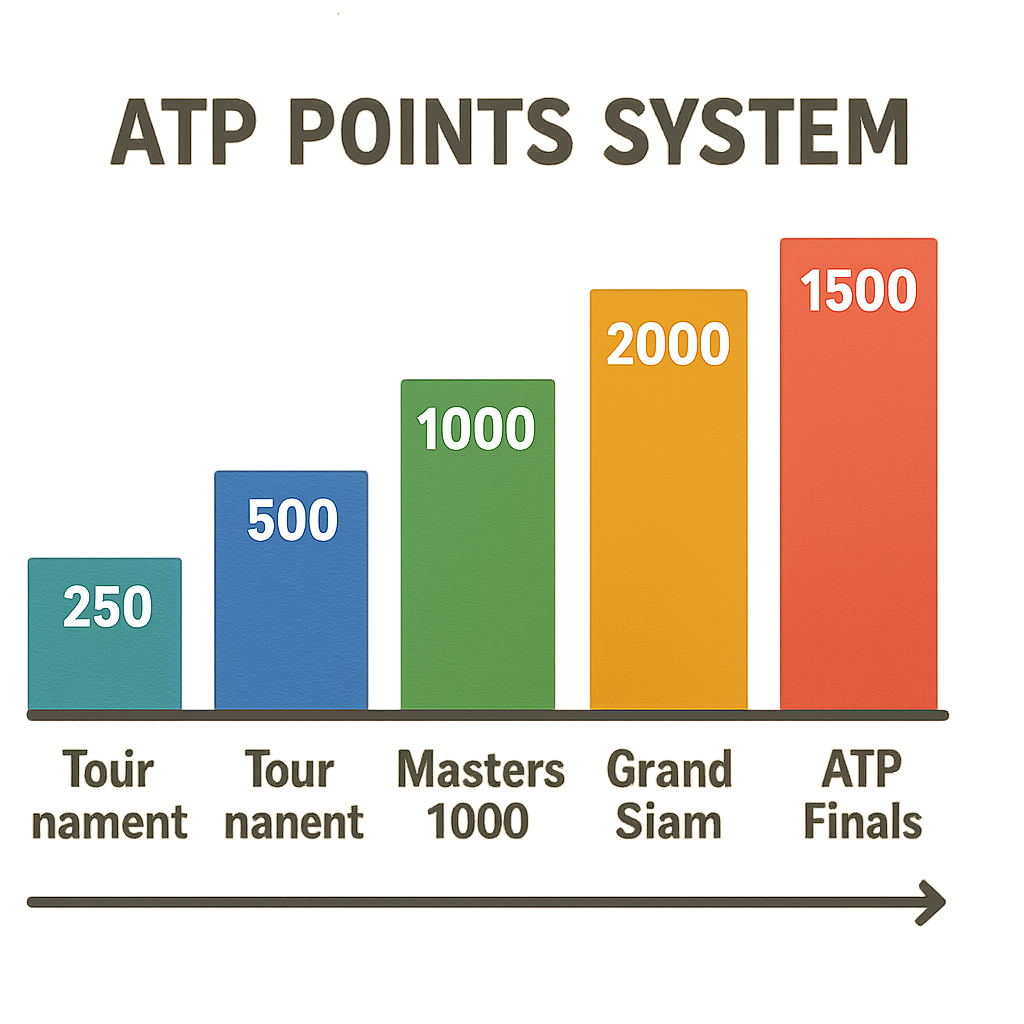
In addition to Grand Slams, players can earn points from various ATP Tour events, including the ATP Masters 1000, ATP 500, and ATP 250 tournaments. Each of these events offers a different number of points, with ATP Masters 1000 events providing the most after the Grand Slams.
ATP Masters 1000: 1000 points for the winner
ATP 500: 500 points for the winner
ATP 250: 250 points for the winner
These tournaments are essential for players to accumulate points and improve their rankings, particularly for those who may not progress far in Grand Slam events.
Significance of ATP Masters 1000
The ATP Masters 1000 events are second only to Grand Slams in terms of prestige and points. These tournaments attract the best players and offer substantial points, making them crucial for players aiming to climb the rankings. Success in Masters 1000 events often indicates a player’s ability to compete at the highest level.
Role of ATP 500 and ATP 250 Tournaments
ATP 500 and ATP 250 tournaments provide valuable opportunities for players to gain points and improve their rankings. While offering fewer points than Grand Slams and Masters 1000 events, these tournaments are essential for players seeking to establish themselves on the tour and build momentum.
Strategic Participation in Tournaments
Players strategically choose which tournaments to enter based on their goals, current form, and ranking needs. Balancing participation across different tournament levels allows players to maximize their points while managing their physical and mental well-being. This strategic approach is vital for sustained success.
Conclusion
The ATP points system is a complex yet fascinating aspect of professional tennis. Understanding how many ATP points are awarded for a Grand Slam and how these points affect player rankings offers deeper insight into the sport. A player’s ranking is not just about winning a single tournament but rather about consistent performance across multiple events. For fans and players alike, the ATP ranking system provides a clear picture of who is currently performing at the highest level in men’s tennis.
By grasping the intricacies of the ATP points system and its impact on player rankings, you can enhance your appreciation of the sport and follow your favorite players’ journeys more closely. As you watch the matches unfold, you’ll gain a deeper understanding of the stakes involved and the strategies players employ to navigate the demanding world of professional tennis.